Note, 2 min read
Iraq's oil leaves Hormuz on Iranian permission and a $20 discount
A strait that opens by permission is a different risk from a closed one. Iraq's discount is the price of that permission, made visible.
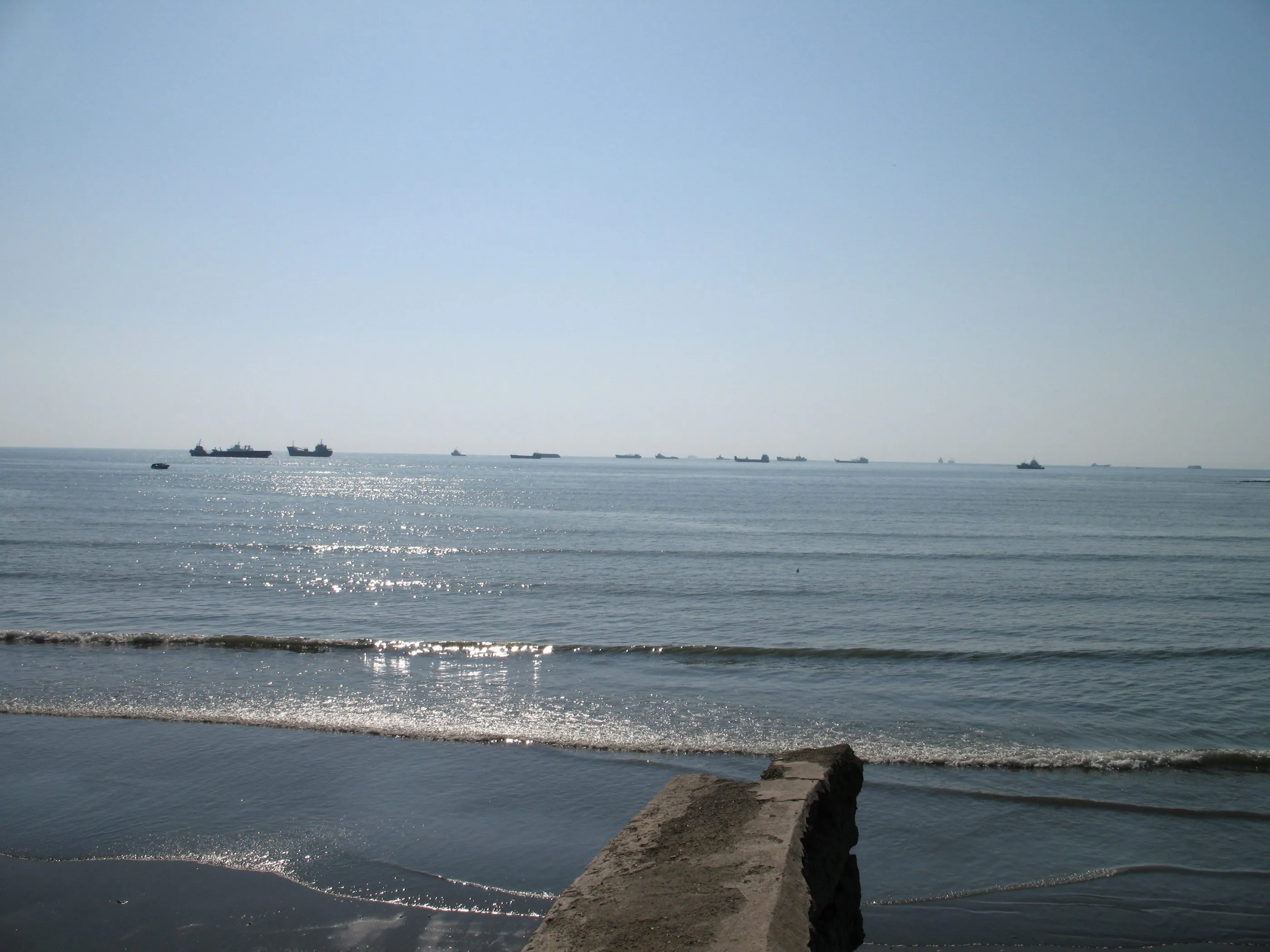
Ships at anchor off Bandar Abbas, Iran's main port on the Strait of Hormuz, December 2007. Ivan Mlinaric, CC BY 2.0.
Reuters reported on 24 September, citing Iran’s state news agency IRNA, that in August “Iran granted a number of tankers carrying Iraqi crude permission to transit the Strait of Hormuz after Baghdad repeatedly requested access through various channels”.
SOMO discount to official price $15–20.80/bbl . Reuters, via Baird MaritimeADNOC purchases of Iraqi crude, September 40m bbl (32m in August) . Reuters, via Baird MaritimeIraq crude exports from southern ports, August average 2.35 mb/d (2.6 mb/d so far in September) . Kpler and Basra Oil Company, via Reuters (Baird Maritime)The barrels still need buyers willing to carry the risk, and Iraq pays for them. A September tender document seen by Reuters showed SOMO, the state marketer, offering crude at $15 to $20.80 a barrel below its official selling price, depending on destination. ADNOC bought 40 million barrels in September, up from 32 million in August. Vitol took 25 to 30 million barrels of September-loading crude. Exports from Iraq’s southern ports averaged 2.35 million barrels a day in August on Kpler’s data, and 2.6 million so far in September, according to the head of Basra Oil Company.
Most risk models treat Hormuz as open or closed. Iraq’s tankers show a third state: open by permission, for some cargoes, at a price. The Red Sea now works the same way. The Houthis say they target only Saudi-linked shipping, and Reuters reported on 25 September that war cover for a Saudi-linked tanker at Yanbu costs around 3% of the ship’s value, against 0.2% to 0.3% for a tanker with no Saudi link.
Valtor’s inference Our reading, and it is an inference: in both straits, passage now depends on a belligerent’s decision about who you are. That makes the risk political and specific to each cargo. A permission can also be withdrawn with a statement, without a shot being fired.
Iraq’s discount is the visible part of that price. The rest is harder to see: in Hormuz the escorts and the transfers at sea, in the Red Sea the transponders switched off for the crossing.
What to watch
- SOMO’s discount. A narrowing toward the official price would mean buyers see less risk in Iraqi barrels. A widening would suggest the permission is in doubt.
- Any change in Iran’s position on Iraqi transits. Reuters, citing IRNA, described permission for “a number of tankers” in August, which is a concession that can be revoked, not a published rule.
Hormuz is not simply closed. For Iraq it is open on terms set in Tehran, and the discount shows what those terms cost.
Figures in this piece
Each also stands in the margin beside the paragraph that states it.
- $15–20.80/bblSOMO discount to official price. Reuters, via Baird Maritime
- 40m bbl (32m in August)ADNOC purchases of Iraqi crude, September. Reuters, via Baird Maritime
- 2.35 mb/d (2.6 mb/d so far in September)Iraq crude exports from southern ports, August average. Kpler and Basra Oil Company, via Reuters (Baird Maritime)
Sources
- Reuters, Vitol becomes Iraq's second-largest crude buyer amid its export struggles, 24 September 2026 (via Baird Maritime)
- Reuters, Red Sea war insurance for Saudi-linked tankers, 25 September 2026 (via Insurance Journal)
- CNBC, Crude oil exports through the Strait of Hormuz hit prewar levels, but fuel shipments remain constrained, 30 September 2026
- Windward, Suez transits are up 59 percent, 1 October 2026
Filed under Strait of Hormuz.
A number here looks wrong? Send a correction. How corrections are handled.
Get it by email
New analysis and notes, at most once a week. The address is used for nothing else, and one reply takes you off the list. Privacy notice.