Note, 3 min read
CENTCOM says Hormuz is clear. The shipping security centre counts 492 ships waiting.
The US commander says the main routes are free of mines. JMIC counted 101 escorted transits in three days and kept the threat level at SEVERE. Brent sits near a six-month high.
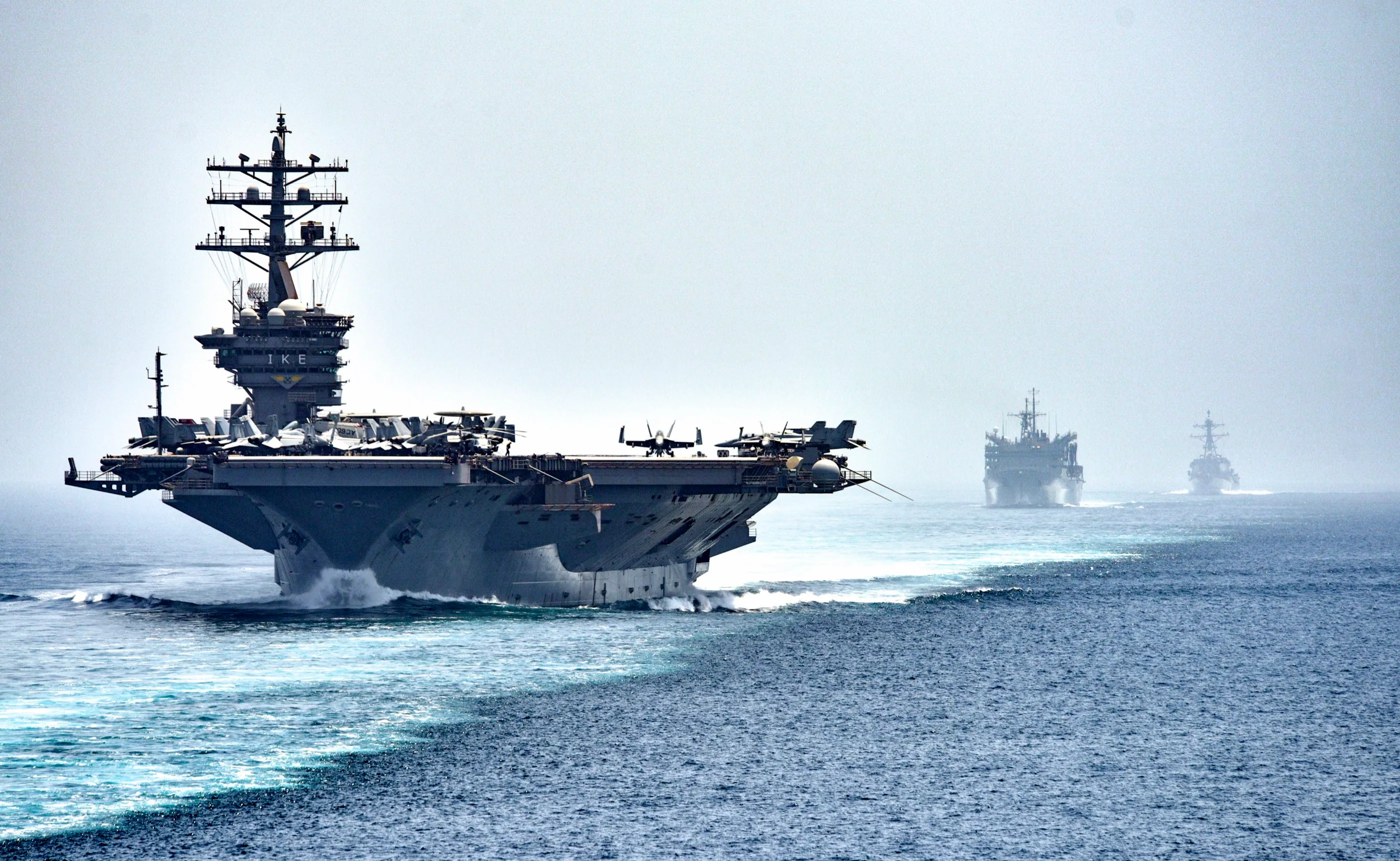
USS Dwight D. Eisenhower, USNS Arctic and USS Nitze transit the Strait of Hormuz, July 2016. U.S. Navy, Public domain.
CENTCOM says the main routes through the Strait of Hormuz are clear of mines. In the same days, the shipping security centre JMIC counted 101 US-facilitated transits in three days and about 492 ships waiting. It kept the threat level at SEVERE. Brent stays near a six-month high.
What happened
On Sunday 25 October, Adm. Brad Cooper, the CENTCOM commander, visited the strait. He flew over it in a CH-47 Chinook, according to a CENTCOM statement. Cooper said “primary transit routes in the Strait of Hormuz remain free and clear of Iranian sea mines.”
Commercial vessels transiting the strait with US support, CENTCOM statement More than 3,000 over the last six months; over 95% of ships navigating the strait sailed through safely in recent months . CENTCOM statement, via Israel National News CENTCOM said more than 3,000 commercial vessels transited the strait with its support “over the last six months”. It said “over 95% of ships navigating the Strait of Hormuz have sailed through safely” in recent months. The US naval blockade of Iran, which resumed 14 July, continues.
Brent crude settlement $116.72 a barrel, up 3.14%, a six-month high . The National (Reuters-based) On 23 October, Brent “leapt 3.14 per cent to settle at $116.72 a barrel”, a “six-month high”, The National reported, citing Reuters. The article attributed the rise to the Houthis launching another wave of attacks on Saudi Arabia. On Monday 26 October, Brent “slid 1.80% to $114.6, down $2.10 per barrel” in Asian trading, Gulf News reported.
What the sources say
US-facilitated transits of the Strait of Hormuz, JMIC (2025 average of about 138 vessels a day is on a different methodology) 101 transits between 22 and 24 October . gCaptain (Mike Schuler) JMIC reported 101 US-facilitated transits between 22 and 24 October. That compares with a historical average of approximately 138 vessels per day in 2025. Our calculation: 101 transits over three days is about 34 a day. CENTCOM’s more than 3,000 vessels over six months is at least 16 a day, also our calculation.
The US-facilitated tally and the 2025 average use different methodologies. They are not a like-for-like comparison, so we state no percentage change.
Vessels waiting outside the strait, JMIC estimate; JMIC threat assessment for the strait About 492 vessels; threat level SEVERE . gCaptain (Mike Schuler) Separate tracking data showed only single-digit daily transits outside the US-facilitated system. As of 25 October, JMIC estimated approximately 492 vessels were waiting outside the strait.
JMIC kept its SEVERE threat assessment for the strait. The wider Gulf stays at SUBSTANTIAL, with five attacks inside the Gulf since 7 October.
UKMTO said a tanker was struck by an unknown projectile at 0839 UTC on 23 October while transiting outbound. The impact disabled the vessel. All crew are safe. The incident was disclosed three days later. UKMTO also had third-party reports of a vessel on fire about 63 nautical miles southeast of Al-Faw, Iraq. It classed this as “suspicious activity rather than a confirmed attack”. The cause is unclear.
Iran’s ambassador to Pakistan said Tehran would reopen Hormuz if Washington lifted its naval blockade. Foreign Minister Abbas Araghchi said Hormuz’s management will not return to pre-war norms.
Valtor’s inference Our reading, which is an inference: the oil price tracks the queue and the threat rating, not the all-clear. CENTCOM speaks to mines. JMIC counts traffic and risk, and its numbers show a low ship count and about 492 vessels waiting. That sits alongside the reports of rising crude exports in our note of 23 October: barrels can leave while hundreds of ships stay outside. The sources do not test the link to the price.
What to watch
- JMIC’s count of US-facilitated transits: whether it stays near 34 a day or climbs toward the 2025 average of about 138 a day. Track the trend, not the ratio, because the methodologies differ.
- JMIC’s estimate of vessels waiting outside the strait: whether it falls from about 492.
- JMIC’s threat level for the strait: whether it moves down from SEVERE, and where Brent trades against its $116.72 settlement of 23 October.
Figures in this piece
Each also stands in the margin beside the paragraph that states it.
- 101 transits between 22 and 24 OctoberUS-facilitated transits of the Strait of Hormuz, JMIC (2025 average of about 138 vessels a day is on a different methodology). gCaptain (Mike Schuler)
- About 492 vessels; threat level SEVEREVessels waiting outside the strait, JMIC estimate; JMIC threat assessment for the strait. gCaptain (Mike Schuler)
- More than 3,000 over the last six months; over 95% of ships navigating the strait sailed through safely in recent monthsCommercial vessels transiting the strait with US support, CENTCOM statement. CENTCOM statement, via Israel National News
- $116.72 a barrel, up 3.14%, a six-month highBrent crude settlement. The National (Reuters-based)
Sources
- Israel National News, CENTCOM commander visits the Strait of Hormuz, 26 October 2026
- gCaptain, tanker disabled in Strait of Hormuz attack, 26 October 2026
- Gulf News, what UAE residents need to know today, 26 October 2026
- The National (Reuters-based), oil prices rise as Houthis launch another wave of attacks on Saudi Arabia, 23 October 2026, updated 24 October
Filed under Iran war.
A number here looks wrong? Send a correction. How corrections are handled.
Get it by email
New analysis and notes, at most once a week. The address is used for nothing else, and one reply takes you off the list. Privacy notice.