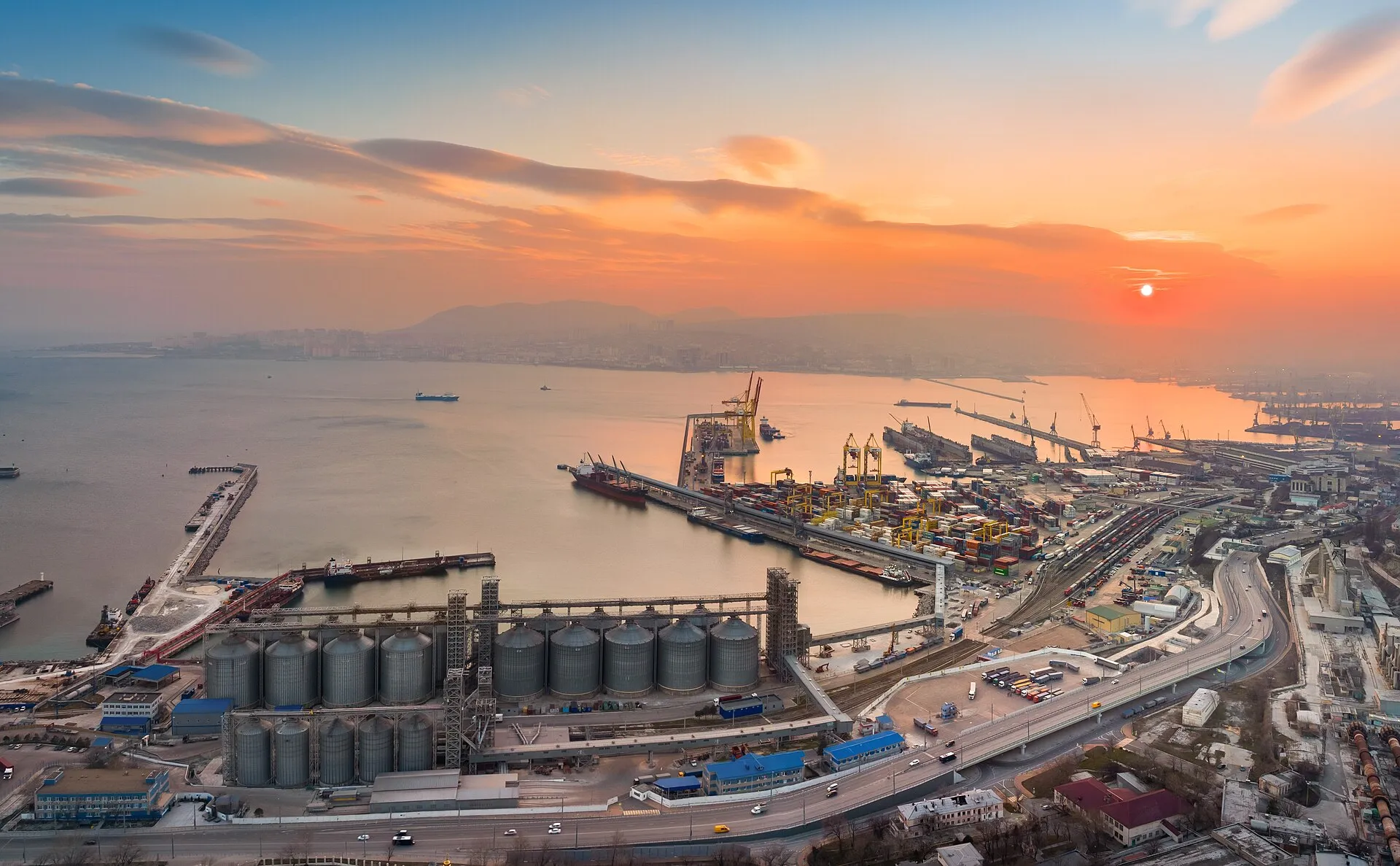
The war decides how much oil, diesel and gas Russia can sell and at what price under Western caps, and what it costs to move cargo across the Black Sea.
Black Sea hull war-risk quotes0.6–1.0% of vessel value before discount (0.2–0.5% a week earlier). BPG Shipping, via Signal Group The war, well into its fifth year, now hits Russia’s oil exports and Black Sea shipping. Ukraine
said it hit four Russian refineries in the week to 9 October. On 13 October drones sank the cargo
ship HS Dignity off Bulgaria with 11 crew missing; Bulgaria says the attacks benefit Russia but has
not accused it. Black Sea hull war-risk quotes were 0.6–1.0% of a ship’s value before discounts on 9
October, against 0.2–0.5% a week earlier. President Trump said on 11 October both sides had agreed
to an energy ceasefire; the Kremlin said only that contacts were ongoing.
Russia’s full-scale invasion began on 24 February 2022, when President Putin announced a “special
military operation”. The Group of Seven (G7), the European Union and Australia answered through oil:
a $60 cap on Russian crude from 5 December 2022, as the EU’s embargo on seaborne crude began, then
caps and an embargo on refined products from 5 February 2023. A UN-brokered deal carried more than
30 million tonnes of Ukrainian grain until Russia withdrew on 17 July 2023; Ukraine then opened its
own corridor. The EU cut its cap to $44.10 from 1 February 2026, then froze it until July 2027,
citing the Strait of Hormuz’s closure. Its ban on Russian liquefied natural gas (LNG) under
short-term contracts began on 25 April; long-term contracts end on 1 January 2027.
Urals crude, September average$90.7/bbl, more than double the $44.10 cap; $23 below Brent. CREARussian fossil-fuel export revenue, SeptemberEUR 625m a day, flat m/m on 6% lower volumes. CREARussian LNG export revenue, SeptemberEUR 75m a day, +68% m/m, highest since January 2023. CREA The Iran war has lifted Russia’s fossil-fuel earnings, says the Centre for
Research on Energy and Clean Air (CREA). Urals crude averaged $90.7 a barrel in September, more than
double the $44.10 cap and $23 below Brent; at Russia’s ports the discount has
held. Fossil-fuel export revenue held at
EUR 625 million a day on 6% lower volumes. LNG revenue rose 68% to EUR 75 million a day, and France
doubled its Russian LNG imports.
Russian seaborne diesel and gasoil exports, September144,000 b/d, lowest in more than a decade of Vortexa data. Vortexa, via BloombergWheat futures, Chicago660.50 cents a bushel, lowest since 18 August. Trading Economics Ukrainian strikes pushed refining rates to multiyear lows; Moscow has banned most diesel exports
since July, and seaborne diesel and gasoil exports fell to 144,000 barrels a day in September, the
lowest in more than a decade of data from the tanker tracker Vortexa. The 500,000 tonnes Moscow offered after
the Trump call are fuel Russia has stopped
exporting. Wheat fell even as
ships were hit, to 660.50 cents
a bushel on 16 October, the lowest since 18 August, on early signs of a larger Australian harvest,
Trading Economics says.
Valtor’s inference Our reading, which is an inference: the caps set the rules at Russia’s ports, the Iran war sets the
price, and Ukraine’s drones set the volume. If diesel loadings stay near September’s level, the
refineries bind, not the export ban. In the Black Sea the cost falls on insurers and shipowners, not
yet on grain.
Key figures
Each also stands in the margin beside the paragraph that states it.
0.6–1.0% of vessel value before discount (0.2–0.5% a week earlier)Black Sea hull war-risk quotes. BPG Shipping, via Signal Group
$90.7/bbl, more than double the $44.10 cap; $23 below BrentUrals crude, September average. CREA
EUR 625m a day, flat m/m on 6% lower volumesRussian fossil-fuel export revenue, September. CREA
EUR 75m a day, +68% m/m, highest since January 2023Russian LNG export revenue, September. CREA
144,000 b/d, lowest in more than a decade of Vortexa dataRussian seaborne diesel and gasoil exports, September. Vortexa, via Bloomberg
660.50 cents a bushel, lowest since 18 AugustWheat futures, Chicago. Trading Economics
Timeline
Drones struck the container ship Contship Jet Monrovia off Bulgaria; it sank and all 18 crew were rescued. Kyiv said the drones were Russian. Al Jazeera
Drones hit two cargo ships off Bulgaria and sank one, the HS Dignity, with 11 crew missing; Bulgaria stopped short of accusing Russia. Reuters, via gCaptain
President Trump said Russia and Ukraine had agreed to an energy ceasefire; the Kremlin said only that contacts were ongoing. Ukrainska Pravda
After a Putin–Trump call, Russia's government partially lifted its diesel export ban, allowing 500,000 tonnes abroad. Russian government, via TASS
Crude loadings at Sheskharis, Russia's main Black Sea oil terminal, were suspended after a drone attack, three unnamed sources said. Pipeline & Gas Journal
The EU's 21st sanctions package suspended changes to the crude price cap until 14 July 2027, citing market disruption after the closure of the Strait of Hormuz. Skadden
The EU's ban on Russian LNG bought under short-term contracts took effect. CREA
The EU's new dynamic mechanism lowered its cap on Russian crude to $44.10 a barrel, effective 1 February. European Commission
Earlier (5)
The first ship left Odesa through Ukraine's temporary corridor for civilian vessels. Ukrinform
The UN-brokered Black Sea grain deal expired after Russia withdrew; it had carried more than 30 million tonnes of Ukrainian grain. United Nations
Price caps of $100 and $45 a barrel on Russian refined products took effect, with the EU's embargo on those products. Orrick
A price cap of $60 a barrel on Russian crude took effect, and the EU's embargo on seaborne Russian crude began to apply. US Treasury (OFAC), Federal Register
President Putin announced a "special military operation" in Ukraine, the start of Russia's full-scale invasion. President of Russia
Russia shipped 0.3 million tons of grain through the Black Sea and Azov in September, against 4.74 million a year earlier. Shipping attacks more than quadrupled. Chicago wheat has still fallen about 22% from its 28 August high.
Bloomberg reports Russian crude offered to Indian refiners above Dated Brent, most likely on a delivered basis. At Russia's western ports, the discount the price cap was built around was still $23 to $25 in September.
Drone strikes near Bulgaria and Romania have killed or left missing at least 23 sailors in ten days. Chicago wheat fell 6% over the same stretch. The cost is showing up in war-risk quotes and in small bulkers' cargo books, not in grain prices.
All eight cargoes came from Yamal, under contracts the EU ban does not reach until 1 January. Russia's LNG earnings hit their highest since January 2023, and China paid about twice what the EU did.
Russia's seaborne diesel exports fell to 144,000 barrels a day in September, the lowest in more than a decade. Moscow has offered 500,000 tonnes, and Kyiv says the refinery strikes go on.
5 sourced figures
Get it by email
New analysis and notes, at most once a week. The address is used for nothing else, and one reply takes you off the list. Privacy notice.